October 5, 2020 — Neurobiology of Conversation – Brain activity depends on who you talk to. “There is a neurobiology of socialness, and neurobiology allows us to modulate our response to diversity,” Hirsch said. “We want to be inclusive, we want equity, and theoretically, neuroscience can say something about how we can achieve that.” The whole article is available at the following link. The original article is available at the Social, Cognitive and Affective Neuroscience website here.
This article is also getting coverage in the press – here is a link to some of the coverage.
The Yale Daily News also has coverage of our study — here is a link to the article.
February 7, 2020 — Two new manuscripts have been accepted for publication.
“Real-Time Eye-to-Eye Contact Is Associated With Cross-Brain Neural Coupling in Angular Gyrus” has been accepted in Frontiers in Human Neuroscience. Click here for the full text.
“Optimization of Wavelet Coherence Analysis as a Measure of Neural Synchrony during Hyperscanning using Functional Near-Infrared Spectroscopy” has been accepted in Neurophotonics — no link is available yet, but this page will be updated as soon as the manuscript is made public.
October 19-23, 2019 — Members of the Brain Function Lab attended the annual Society for Neuroscience Conference in Chicago, IL. Spectrum News published a very nice summary of the work presented. It is available at the following link.
July 9-10, 2019 — Drs. Hirsch and Noah attended the 2nd “Shimadzu Global Innovation Summit 2019” held at Shimadzu Headquarters in Kyoto, Japan. Dr. Noah won an “Excellent Poster Award” for work related to understanding neural activity associated with eye to eye contact. More information about the conference is available at the following link.
January 11, 2019 — Joy Hirsch, PhD, Professor of Psychiatry, of Comparative Medicine and of Neuroscience, Yale School of Medicine: “The New Neuroscience of Two Neural Dynamics of Communicating Brains: Hyperscanning with fNIRS”.
January 9, 2019 — Two students from our lab have been announced as semi-finalists in the Regeneron Science Talent Search. The official announcement can be downloaded here. Congratulations to Aaron Geula and Michelle Goh!! More information will be made available on January 23, 2019 on the Regeneron website. Click here for more information.
October 5, 2018 — Several new manuscripts have been published by members of the brain function lab including studies on verbal and non-verbal interactive communication using hyperscanning and fNIRS. The manuscripts are in the journal “Social Cognitive and Affective Neuroscience”. References and direct links to the articles are below:
May 31, 2018 — The work of the Brain Function Lab is featured in Scitech Europa. “The new neuroscience of ‘two’: the challenge to understand communicating brains” Full article here.
March 1, 2018 – Dr.Hirsch and the social research in the Brain Function Lab was highlighted in issue 124 of Research Features magazine, titled: “Celebrating Women in Science”. The entire issue is available online for free here. A pdf of the article “Two brain neuroscience: understanding our social selves” is available here.
Century of women at Yale School of Medicine: Dr. Hirsch was recently featured as one of the distinguished women at the Yale School of Medicine. More information is available here.
November 10-15, 2017 – The members of the Brain Function Lab attended the Society for Social Neuroscience and the Society for Neuroscience meetings in Washington, DC. The lab presented many posters and talks. A full list is available here.
April 20, 2017 – An undergraduate student in the lab, Jenny Jeiyoun Park showed her senior thesis for her degree in Art. The Painting represents influential aspects of Jenny’s second life as a scientist.
Scientists Brace for a Lost Generation in American Research
Private funding isn’t enough to offset the president’s proposed budget cuts, they say.
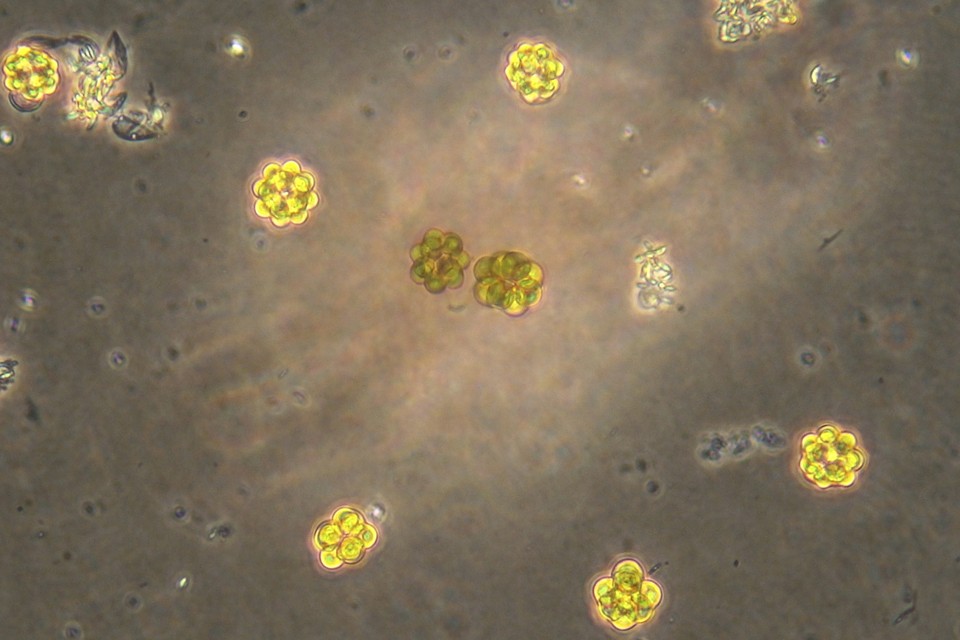
A microscopic view of algae colonies Jon Nazca / Reuters
The work of a scientist is often unglamorous. Behind every headline-making, cork-popping, blockbuster discovery, there are many lifetimes of work. And that work is often mundane. We’re talking drips-of-solution-into-a-Petri-dish mundane, maintaining-a-database mundane. Usually, nothing happens.
Scientific discovery costs money—quite a lot of it over time—and requires dogged commitment from the people devoted to advancing their fields. Now, the funding uncertainty that has chipped away at the nation’s scientific efforts for more than a decade is poised to get worse.
The budget proposal President Donald Trump released on Thursday calls for major cuts to funding for medical and science research; he wants to slash funding to the National Institutes of Health by $6 billion, which represents about one-fifth of its budget. Given that the NIH says it uses more than 80 percent of its budget on grant money to universities and other research centers, thousands of institutions and many more scientists would suffer from the proposed cuts.
“One of our most valuable natural resources is our science infrastructure and culture of discovery,” said Joy Hirsch, a professor of psychiatry and neurobiology at the Yale School of Medicine. “It takes only one savage blow to halt our dreams of curing diseases such as cancer, dementia, heart failure, developmental disorders, blindness, deafness, addictions—this list goes on and on.”
For decades, scientists have been rattled by the erosion of public funding for their research. In 1965, the federal government financed more than 60 percent of research and development in the United States. “By 2006, the balance had flipped,” wrote Jennifer Washburn a decade ago, in a feature for Discover, “with 65 percent of R&D in this country being funded by private interests.”
This can’t be all bad, can it? Given the culture of competition in Silicon Valley, where world-changing ideas attract billions upon billions of dollars from eager investors, and where many of the brightest minds congregate, we may well be entering a golden era of private funding for science and medicine.
Along with the business side of science, the world’s tech leaders have built a robust philanthropic network for research advancement. The Bill & Melinda Gates Foundation is a major force in the prevention of infectious diseases, for example. Last year, the Facebook founder Mark Zuckerberg launched his own foundation—with his wife, Priscilla Chan, who is a pediatrician—aiming to help “cure, prevent or manage all diseases in our children’s lifetime.” Between those two initiatives alone, billions of dollars will be funneled to a variety of crucial research efforts in the next decade.
But that amount still doesn’t approach $26 billion in NIH research grants that are doled out to scientists every year. For about a decade, stagnant funding at the NIH was considered a serious impediment to scientific progress. Now, scientists say they are facing something much worse.
I asked more than a dozen scientists—across a wide range of disciplines, with affiliations to private schools, public schools, and private foundations—and their concern about the proposed budget was resounding. The consequences of such a dramatic reduction in public spending on science and medicine would be deadly, they told me. More than one person said that losing public funding on this scale would dramatically lower the country’s global scientific standing. One doctor said he believed Trump’s proposal, if passed, would set off a lost generation in American science.
“Where do I start?” said Hana El-Samad, a biochemist at the University of California, San Francisco, School of Medicine and an investigator in the Chan Zuckerberg Biohub program, one of the prestigious new privately funded science initiatives in Silicon Valley. In her research, El-Samad analyzes biological feedback loops, studying how they work so that she can predict their failure in diseases.
“First, we most certainly lose diversity in science—ranging from diversity of topics researched to diversity of people doing the research,” she told me. “Since we don’t know where real future progress will come from, and since history tells us that it can and almost certainly will come from anywhere—both scientifically and geographically—public funding that precisely diversifies our nation’s portfolio is crucial.”
Private funding, on the other hand, is often narrowly focused. Consider, for example, Elon Musk’s obsession with transporting humans to Mars. The astronaut Buzz Aldrin told CNBC this week that Musk’s plan may be well-funded, but it’s not very well thought out—and that cheaper technology isn’t necessarily better. “We went to the moon on government-designed rockets,” Aldrin said.
Even if Musk’s investment in SpaceX does represent a world-changing scientific effort—it’s not enough by itself.
“Funding like the Chan-Zuckerberg Initiative is fantastic and will be transformative for Bay Area Science,” said Katherine Pollard, a professor at the UCSF School of Medicine and a Chan Zuckerberg Biohub researcher who studies the human microbiome. “But the scope and size of even a large gift like this one cannot come close to replacing publicly supported science.” The unrestricted research funding she’s getting as part of her work with the Chan Zuckerberg program is “still only 10 percent of what it costs to run my lab,” she said.
And what happens to all the crucial basic science without billionaire backing—the kind of research with wide-ranging applications that can dramatically enhance human understanding of the world? NIH funding is spread across all disciplines, several scientists reminded me, whereas private funding tends to be driven by the personal preferences of investors.
Plus, scientific work is rarely profitable on a timescale that delights investors. The tension between making money and making research strides can result in projects being abandoned altogether or pushed forward before they’re ready. Just look at Theranos, the blood-testing company that was once a Silicon Valley darling. As The Wall Street Journalreported last year, even when the company’s technology hadn’t progressed beyond lab research, its CEO was downplaying the severity of her company’s myriad problems—both internally and to investors. Its fall from grace—and from a $9 billion valuation—is a stunning and instructive illustration of where private and public interests in scientific research can clash.
But also, in a privately-funded system, investor interest dictates the kind of science that’s pursued in the first place.
“Put simply, privatization will mean that more ‘sexy,’ ‘hot’ science will be funded, and we will miss important discoveries since most breakthroughs are based on years and decades of baby steps,” said Kelly Cosgrove, an associate professor of psychiatry at Yale University. “The hare will win, the tortoise will lose, and America will not be scientifically great.”
America’s enduring scientific greatness rests largely on the scientists of the future. And relying on private funding poses an additional problem for supporting people early in their careers. The squeeze on public funding in recent years has posed a similar concern, as young scientists are getting a smaller share of key publicly-funded research grants, according to a 2014 study published in the Proceedings of the National Academy of Sciences. In 1983, about 18 percent of scientists who received the NIH’s leading research grant were 36 years old or younger. In 2010, just 3 percent of them were. Today, more than twice as many such grants go to scientists who are over 65 years old compared with people under 36—a reversal from just 15 years ago, according to the report.
The proposed NIH cuts “would bring American biomedical science to a halt and forever shut out a generation of young scientists,” said Peter Hotez, the dean of the National School of Tropical Medicine at Baylor College of Medicine. “It would take a decade for us to recover and move the world’s center of science to the U.S. from China, Germany, and Singapore, where investments are now robust.”
The cuts are not a done deal, of course. “Congress holds the purse strings, not the president,” said Senator Brian Schatz, a Democrat from Hawaii and a member of the Appropriations Committee, in a statement.
In the meantime, there’s a deep cultural question bubbling beneath the surface of the debate over science funding, one that seems to reflect a widening gap in trust between the public and a variety of American institutions. A Pew survey in 2015 found that more than one-third of people said they believed private investments were enough to ensure scientific progress. And while most people said they believed government investment in basic scientific research “usually” paid off in the long run, other research has showed a sharp decline in public trust in science—notably among conservatives. This erosion of trust means that the politicization around specific areas of scientific inquiry, like climate change and stem-cell research, may have deep consequences for scientific advancement more broadly.
El-Samad, the biochemist, describes this dynamic as the weakening of a social contract that once made the United States the scientific beacon of the world. In her view, there is something almost sacred about using taxpayer dollars to fund research.
Using “the hard earned cash of the citizens, all of them—has constituted an enduring bond between the scientist and the public,” she told me. “It was clear that we were, as scientists, bound by the necessity to pay them back not in kind, but in knowledge and technology and health. And they, the citizens, took pride and well deserved ownership of our progress. I truly believe that this mutual investment and trust is what made science in the United States of America a model to follow for the rest of the world, and also gave us the tremendous progress of the last decades. Huge setbacks will ensue if this erodes.”
February 23, 2017 from 4:00-5:30 p.m. – Dr. Hirsch will be presenting work from our lab at Gallaudet University. The lecture will be in the Library, (MLB) Room B111. There will be a reception to follow. A live stream of the lecture will be available and archived at webcast.gallaudet.edu. Additional info below:
THE NEW NEUROSCIENCE OF “TWO”: COMMUNICATING EYE-TO-EYE.
Human brains are primarily adapted for social interaction and communication. However, the underlying neural processes associated with social interaction and communication are not well-understood. This knowledge gap reflects both conventional limitations in neuroimaging methods that are restricted to single individuals and not conducive to investigations of naturally occurring human interactions, and also a limited theoretical framework for understanding human interpersonal interactions. Both are addressed by recent developments that include: 1) a novel hyperscanning technology (functional near-infrared spectroscopy, fNIRS) that acquires hemodynamic signals simultaneously between two naturally interacting partners using a spectral absorbance technique that detects changes in hemodynamic signals acquired by surface-mounted optodes, and 2) a recently proposed Interactive Brain Hypothesis that establishes a broad theoretical framework for two-person social neuroscience. This hypothesis is based on the assumptions that two-way communications elicit specific neural processes some of which will synchronize across interacting brains. Here I present evidence for these assumptions based on two social behaviors, eye-to-eye contact and verbal dialogue. Hemodynamic signals associated with eye-to-eye contact between partners (interactive condition) were compared with signals associated with mutual gaze at eyes in a picture of a face (non-interactive condition). Similar signals for picture naming and description in a dialogue (interactive) condition were compared with picture-naming and description in a monologue (non-interactive) condition. Consistent with the Interactive Brain Hypothesis, both eye-to-eye contact effects and dialogue effects were observed in a left frontal and temporal-parietal complex including the canonical language system. Further, cross-brain synchrony observed by wavelet analysis in the interactive conditions was observed for the temporal-parietal complex. These findings are consistent with the Interactive Brain Hypothesis and suggest a model of neural specializations for communication that links eye-to-eye contact and language systems via frontal, central, and temporal-parietal networks.
January 31, 2017 – Work from the Brain Function lab in collaboration with Jamie McPartland was featured in Spectrum. The article discusses the benefits of fNIRS for studies of social brain function and suggests there is a new frontier of “interactive social neuroscience” or “second-person neuroscience” developing that will allow for better understanding of the social difficulties associated with autism. The full text of the article is here.
November 12-16, 2016 – Members of the Brain Function Lab attended the Society for Neuroscience annual conference in San Diego, California. We presented a series of posters and symposia focusing on social neuroscience and applications of fNIRS. The titles are listed below:
November 11, 2016 – Members of the Brain Function Lab attended the Society for Social Neuroscience meeting in San Diego, California. We presented a poster focusing on direct eye-to-eye contact in real-world conditions.
Joy Hirsch, J. Adam Noah, Xian Zhang, Swethasri Dravida, Ilias Tachtsidis: Neural correlates of eye-to-eye contact include language and social systems: An fNIRS hyperscanning investigation
October 13 – 16, 2016 – Members of the Brain Function Lab recently attended the bi-annual conference of the Society for Nearinfrared Spectroscopy in Paris France. The conference was at the Université Paris Descartes. More information about the conference is at the following link. Three posters and an oral session were presented.
Joy Hirsch, J. Adam Noah, Xian Zhang, Swethasri Dravida, Ilias Tachtsidis: Identification of Neural Systems Involved in Interpersonal Eye-to-Eye Contact: An fNIRS Hyperscanning Investigation.
J. Adam Noah, Swethasri Dravida, Xian Zhang, and Joy Hirsch: Deoxyhemoglobin changes in right lateralized DLPFC represent conflict processing in a color-word Stroop task.
Xian Zhang, J. Adam Noah, Swethasri Dravida, and Joy Hirsch: A comparison of fMRI and fNIRS deoxyhemoglobin signals: A global component removal approach.
Swethasri Dravida, J. Adam Noah, Xian Zhang, & Joy Hirsch: Consistency in fNIRS Recordings during Digit-Manipulation Tasks.